Short answer
An old fireplace smokes when something weakens its draft: a cold flue, a damper that opens only partway, or a flue too small for the opening. On renovated Scarsdale houses, a chimney left too short by a later dormer, or a tight house that pulls air down the flue, can cause it too. Smoke that clears after a few minutes points to a cold flue; smoke that stops when a window is opened points to a house short of air.
Draft basics: what moves smoke up an old Scarsdale chimney
A fireplace has no fan. Smoke leaves the room because the hot gas in the flue weighs less than an equal column of outdoor air, and that difference pulls room air in at the bottom and pushes smoke out at the top. This is called the stack effect, or chimney effect. Nearly every smoky-fireplace complaint traces back to that column: how hot it is, how tall it stands, how freely it moves, and whether the house is pulling against it.
Scarsdale has a great many fireplaces that depend on it. The Village's own history dates its turn from farmland to suburb to the subdivision of Arthur Manor in 1891 and a housing boom, many of whose homes remain in use today, and the Tudor Revival style the village took up in the 1920s treats a massive chimney, often several flues in one stack, as a showpiece. Those fireplaces were designed for leakier houses and for the rooflines they were built with. A century of renovations and additions has changed both, which is why a fireplace that drew well for decades can start smoking for a new owner.
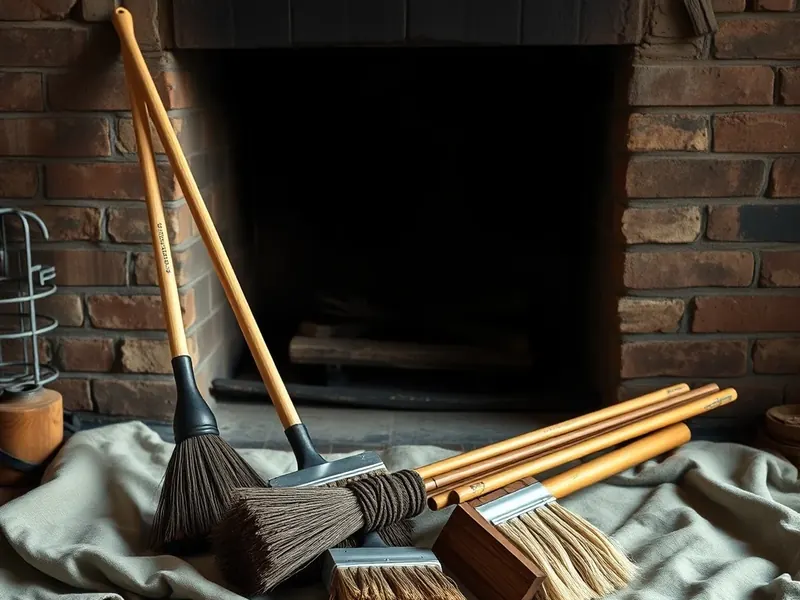
The cold flue on the first fire of the season
The Department of Energy notes that natural-draft fireplaces are vulnerable to backdrafting when the chimney is cool or the fire is burning low, which describes the first fire of every fall. Over the summer the flue fills with air at outdoor temperature, and a tall stack holds a lot of it. Tudor Revival houses often set the chimney prominently on a front or side wall, so much of the stack stands outside the heated house and cools quickly between fires.
When a cold flue is the whole story, smoke rolls out for the first few minutes and then the fire draws normally. To help it along:
- Open the damper fully before building the fire, and confirm with a flashlight that the plate actually moved.
- Start with newspaper and dry kindling, as the EPA's Burn Wise program recommends, and give that small, hot fire a few minutes before adding split logs.
- Do not smother a new fire with a full load of wood; a low, smoldering fire is exactly what lets a cool flue reverse.
- Crack a nearby window while the fire catches.
Smoke that continues once the flue has warmed has another cause.
Damper and smoke chamber problems above the firebox
Between the firebox and the flue is a short passage that does more work than its size suggests. Many fireplaces of this era close with a cast-iron throat damper set just above the opening, and above it the smoke chamber funnels smoke from the wide firebox into the narrower flue. Today's residential code requires that passage, damper and smoke chamber included, to be no smaller in cross-section than the flue, and the smoke chamber to be parged smooth with refractory mortar. A century-old fireplace may meet neither requirement, and age works against both.
- A damper that opens only partway. Rust, a warped plate or a slipped linkage can leave the plate half open while the handle reads fully open, making the throat the tightest point in the system.
- Debris on the smoke shelf. The ledge behind the damper gathers soot, fallen mortar, flue tile chips and leaves from an uncapped flue.
- A rough smoke chamber. Stepped, unparged brick disturbs the flow and gives creosote shelves to settle on.
Check the first two with the fire out and a strong flashlight; the smoke chamber takes a mirror or a camera. When an old throat damper is beyond adjustment, a top-sealing damper at the chimney top is a common replacement, and our fireplace repair page describes that work.
Flue size compared with the fireplace opening
A flue can be clean, warm and wide open and still be too small for the fireplace beneath it. NFPA 211, as summarized in the Chimney Safety Institute of America's inspection procedure for masonry fireplaces, ties the flue's inside area to the area of the fireplace opening:
- Round flue: at least one-twelfth of the opening.
- Square or standard rectangular flue: at least one-tenth.
- Rectangular flue at least twice as long as it is wide: at least one-eighth.
An opening 36 inches wide and 30 inches high has 1,080 square inches of area, so a square or standard rectangular flue serving it needs about 108 square inches of clear inside area. The flue has to be measured from the top or on camera, because a tile's inside is smaller than its outside.
In older houses the ratio tends to break in two ways: a large living-room fireplace with an opening bigger than its flue comfortably serves, or a flue relined at some point with less inside area than the opening calls for. The fixes are a smaller opening, for example tight-fitting glass doors or a lowered top edge, or more flue area. A chimney inspection records the real measurements before anyone recommends either.
Chimney height, nearby rooflines and tall trees
Wind crossing a roof speeds up over the ridge and tumbles down the far side, and a chimney top sitting in that eddy can have air pressed down into it. To keep chimney tops above that zone, NFPA 211 and the model residential building code share a minimum often called the 3-2-10 rule: a chimney must extend at least 3 feet above the highest point where it passes through the roof, and at least 2 feet higher than any part of a building within 10 feet, measured horizontally.
On a Tudor Revival house the second half of the rule deserves the closer look. Steep roofs, front-facing gables and dormers put a lot of building within 10 feet of the chimney, and a stack that cleared everything when it was built can fall short after a later dormer or second-story addition. If a ridge within about 10 feet looks higher than the chimney top, or only slightly lower, have the height measured.
Trees are not part of the rule, but they shape the same airflow. A chimney ringed by tall oaks or sitting below a neighbor's higher roof can catch gusts that push smoke down even when it meets the minimum; the telltale is smoke on windy days, often with the wind from one direction, and quiet calm nights. Remedies run from a wind-resistant cap to a taller flue. Raising a chimney changes how the house looks from the street, and Scarsdale's Board of Architectural Review considers applications for exterior alterations of existing buildings, so plan for that review as well as a building permit. Our chimney cap and crown repair page covers caps for multi-flue stacks.
Negative pressure in a tight, renovated house
Weatherproofing has closed the gaps that once let outdoor air seep into older houses, and the Chimney Safety Institute of America calls the smoke that results from a second, unused fireplace quite a common problem in today's airtight houses. A fire sends a lot of room air up the chimney, and that air has to be replaced. In a 1920s house that has gained new windows, insulation, a strong range hood, bath fans and a clothes dryer, the easiest way back in can be down a flue, bringing smoke along.
Houses with more than one fireplace show a version that puzzles owners. In its homeowner answers, CSIA explains why a downstairs fireplace smokes while only the upstairs one is lit: the unused fireplace's flue becomes the route for replacement air, which picks up smoke leaving the neighboring flue at the top of the shared stack. On a Scarsdale chimney serving two or three fireplaces, a sooty smell in a room with a cold hearth points straight at pressure.
To test, open a window in the smoking room; if the smoke turns up the flue within a minute or two, the house is short of air. Then switch off the range hood, bath fans and dryer one at a time. Longer-term fixes include an outdoor air supply into the firebox with tight-fitting glass doors, as the Department of Energy recommends when a natural-draft fireplace is installed, make-up air for big exhaust fans, and, as CSIA suggests, a top-mounted damper kept closed on the least-used fireplace. The same pressure can pull boiler or water heater exhaust, with its carbon monoxide, back indoors, so keep CO alarms working on every level, and if one sounds, get everyone outside and call 911.
What to check before you call, and what an inspection looks at
With the fire out and the fireplace cold, work through these:
- Does the damper open all the way, with daylight or the underside of a cap visible above it?
- Is the smoke limited to the first minutes of a fire?
- Does it stop with a window open or the exhaust fans off?
- Does it come with wind from one direction?
- Is the wood dry? Our wood-burning season guide covers seasoning and moisture meters.
- Has the roof near the chimney changed since the house was built?
Smoke seeping from a wall, a ceiling or the attic, a roaring sound in the chimney, or a CO alarm is not a draft problem: leave the house and call 911 first.
For a fireplace that simply smokes, CSIA's Level 2 procedure for masonry fireplaces covers the same ground with measurements: the opening, the damper, the smoke chamber's height, wall angle and parging, the flue's inside size against the opening, the termination height, the neighboring flues and any outside air supply. A good visit also watches the fireplace with the house running normally, fans included; our guide to chimney inspection levels explains when that depth applies. To book with Chimney Services Pro, describe when the fireplace smokes and what you have tried, and if you need it back in use quickly, ask about priority or same-day scheduling when available.