Chimney sweep and repair in Bronxville, NY
Bronxville packs a great deal of history into about one square mile. According to the village, roughly 72 percent of its housing was built before 1939, and about 40 percent of residents live in apartments, co-ops or condominiums rather than houses. That profile shapes chimney sweep and repair in Bronxville, NY more than anything else: old masonry, original flues, and a mix of single-family fireplaces and central boiler chimneys.
The village sits within the Town of Eastchester, a few miles south of Scarsdale along the Bronx River Parkway, so it is a short trip for Chimney Services Pro.
Chimneys that have stood since before the Second World War have usually been through several heating systems: coal, then oil, and often gas. Each change left its mark on the flue, and not every change came with a liner suited to the new appliance. On top of that, close to a century of freeze-thaw cycles has worked on crowns and mortar joints. That is why a first visit to an older Bronxville house usually includes a close look at the flue, not just a cleaning.
Lawrence Park: hillside houses on winding roads
The Lawrence Park Historic District, developed from the 1890s by William Van Duzer Lawrence, sits on a wooded hillside laced with winding roads, and it drew artists and writers among its early residents. Its houses span Colonial Revival, Classical Revival, Shingle and Tudor Revival styles. From a chimney standpoint, the hillside is the defining feature: houses sit above or below the road, chimneys can be very tall on the downhill side, and ladder placement has to be planned around slopes, stone walls and plantings.
We plan access before the day of the visit, protect plantings and walkways, and use roof anchors or staging when a chimney is too tall to work safely from a ladder alone. Shingle-style houses add another consideration: wood siding and trim close to the chimney. We check clearances and flashing carefully, because on a wood-sided house a leak around the chimney can rot framing long before it stains an interior wall.
Tudor chimney details worth preserving
Around the village, English Cotswold and French Normandy Tudors sit alongside the occasional Mission Revival house, a nod to the long-gone Hotel Gramatan. The chimneys on these houses are design elements in their own right: clustered flues, corbelled tops, patterned brick, clay pots and stone accents. Repairs should disappear into them.
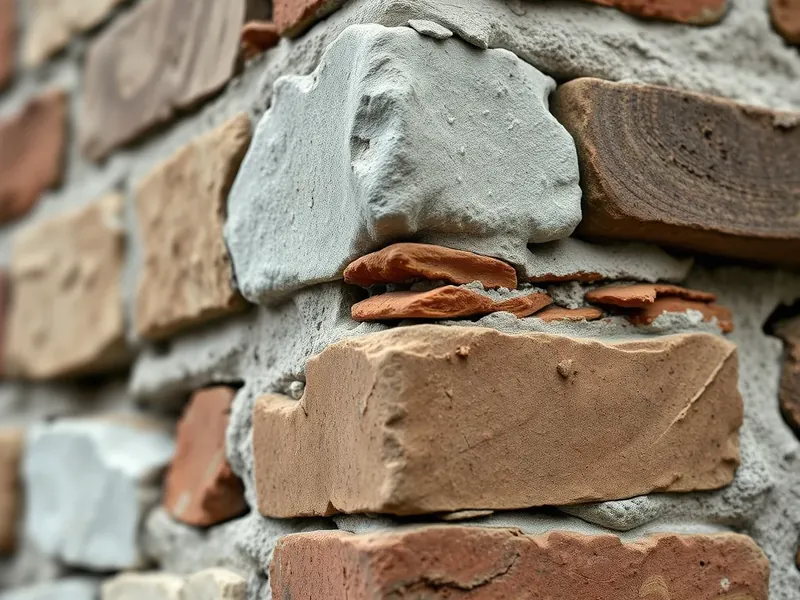
We match brick by color, size and texture, look for salvaged units when new ones will not blend, and match mortar to the original in both strength and appearance. Before any part of a stack comes down for rebuilding, it is photographed and measured so decorative courses and pots go back exactly as they were. Our tuckpointing and chimney rebuilding page covers the process.
Apartment buildings near Pondfield Road and the station
Close to Pondfield Road and the Metro-North station, Bronxville's apartment and co-op buildings rely on boiler chimneys that run all winter. Many of these flues are original, and decades of condensation from modern burners take a toll on tile liners and on the mortar near the top of the stack. We coordinate with superintendents and managing agents, record the flue on camera, and deliver written findings the board can act on. Start with a chimney inspection, or see our notes on the rest of the town in Eastchester and Tuckahoe.
Sagamore Park, the 1920s build-out and co-op carbon monoxide rules
North of Lawrence Park, Sagamore Park was created by a syndicate of local residents, and after the Bronx River Parkway was completed in 1925 the village grew quickly, adding apartment buildings and townhouses. Lewis Bowman, an architect whose work is concentrated in Bronxville and Lawrence Park, designed several dozen of its houses. On architect-designed houses like these the chimney is part of the composition, in stone, brick or stucco, and a repair has to respect the design as well as the flue.
Bronxville's many co-op and condominium apartments fall under New York's Amanda's Law too. Since February 22, 2010, the law has required carbon monoxide alarms in one- and two-family homes, multiple dwellings, co-ops and condominiums that have a fuel-burning appliance, system or attached garage. In a building on a central boiler, ask the managing agent how the alarms are placed, and keep the boiler chimney on a yearly inspection schedule; a deteriorated flue in a building that size is usually solved with a stainless chimney liner.